A real estate script is a set of words you plan ahead for a call, text, or conversation you have over and over. Below are 22 scripts, written word for word and sorted by the situation you are in: prospecting calls, lead follow-up, setting and winning the listing appointment, common objections, and the texts and emails that go with them.
Each script has four parts: when to use it, the script itself, why it works, and one tip. Change the words until they sound like you. A script you have practiced until it sounds like normal conversation beats a perfect one you read off a screen.

Quick Pick: Which Script Do You Need?
| Your situation | Script |
|---|---|
| Calling a homeowner you have never talked to | #1 Cold call |
| You just sold a home in the neighborhood | #2 Just sold call |
| You just listed a home and are holding an open house | #3 Just listed call |
| A listing just expired | #4 Expired listing call |
| A home is for sale by owner | #5 FSBO call, #6 FSBO text |
| Asking friends and past clients for referrals | #7 Sphere call |
| A new buyer lead came in online | #8 Online buyer lead |
| Someone asked what their home is worth | #9 Home value request |
| The day after an open house | #10 Open house follow-up |
| The lead is not answering | #11 Voicemail, #12 Follow-up texts |
| Booking a listing appointment | #13 Setting the appointment |
| Wrapping up a listing presentation | #14 Listing presentation close |
| "We want to wait" | #15 |
| "We're talking to other agents" | #16 |
| "Your commission is too high" | #17 |
| "Zillow says it's worth more" | #18 |
| "We'll sell it ourselves" | #19 |
| A buyer asks why they have to sign before a showing | #20 |
| Email after a first call | #21 |
| Staying in touch with your sphere by text | #22 |
Prospecting Scripts
These are for people who did not ask to hear from you, so the first ten seconds matter most.
1. Cold Call to a Homeowner
When to use it: Calling owners in your farm area or on a list of likely sellers when you have no prior contact.
"Hi, is this [Name]? Hi [Name], this is [Your Name], I'm a real estate agent with [Brokerage] here in [Town]. I'll be quick. I'm calling a few owners on [Street] because homes in the neighborhood have been selling fast and there's not much for sale. Have you thought at all about selling in the next year or so?"
If no: "Fair enough. Just curious, if you ever did move, where would you go?"
If maybe: "What would need to happen for a move to make sense?"
To close either way: "Would it help if I sent you what homes on your street sell for, a couple of times a year? No calls attached."
Why it works: The reason for calling is about their street, not about you. "Have you thought at all about selling?" is easier to answer honestly than "Are you interested in selling?", which almost always gets a fast no.
Tip: If you really have buyers looking in that area, say so. If you do not, never claim you do.
2. Just Sold Call (Circle Prospecting)
When to use it: After a home you sold, or one that sold nearby, closes. Call the 50 to 100 homes around it. Our circle prospecting guide covers how to pick the area.
"Hi [Name], this is [Your Name] with [Brokerage]. I just helped sell the home at [Address], around the corner from you. It went under contract in [X] days, and we had more interested buyers than homes to show them. I'm letting neighbors know because it usually means homes like yours are worth more than people think. Do you have a feel for what homes on your street are going for right now?"
"Would you like me to send you the final sale price, along with a couple of other recent sales nearby?"
Why it works: Neighbors are curious about nearby sales, and the offer to send the price gives you a reason to follow up.
Tip: Wait until the sale closes before sharing the price, and follow your MLS rules on what you can share.
3. Just Listed Call (Open House Invite)
When to use it: In the days before an open house on a new listing.
"Hi [Name], it's [Your Name] with [Brokerage]. I just listed [Address], a few doors down from you, and I'm holding an open house Saturday from 1 to 3. I'm calling neighbors first, before it goes out everywhere, for two reasons. You're welcome to stop by and see it, and you might know someone who'd love to live near you. Does anyone come to mind?"
Why it works: It is an invitation, not a pitch, and "someone who'd love to live near you" lets them pick their own neighbor.
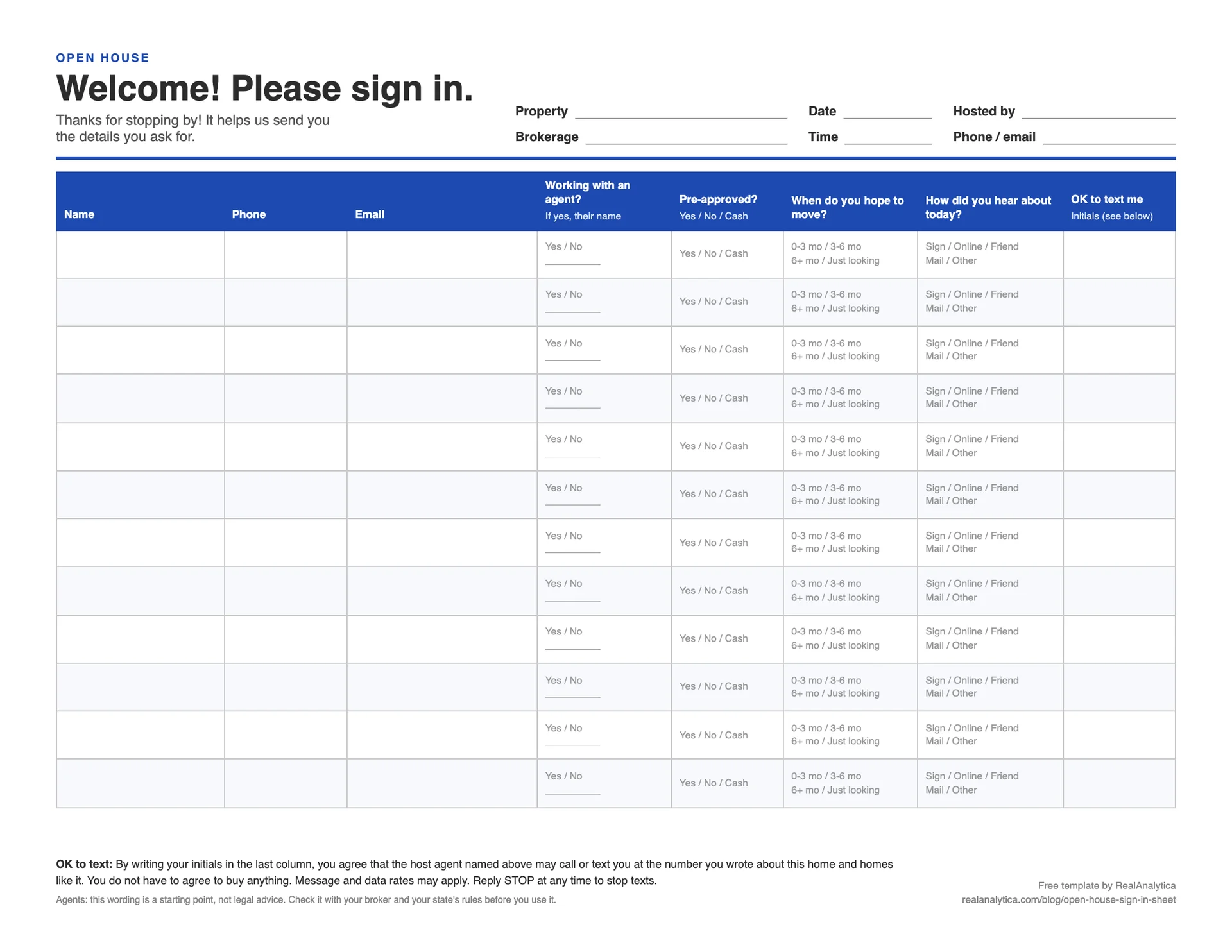
Tip: Neighbors who show up are some of your best future sellers. Have a sign-in sheet ready so you can follow up with script #10.
4. Expired Listing Call
When to use it: The day a listing expires, or soon after. Expect the seller to be getting a lot of agent calls. More on working these in our expired listings guide.
"Hi, is this [Name]? Hi, this is [Your Name] with [Brokerage]. I saw your home on [Street] came off the market. I'll be honest, you're probably getting a lot of calls from agents today, so I'll keep it short. Are you still hoping to sell?"
If yes: "Can I ask what you think kept it from selling?"
Listen, then: "And if it had sold, where were you planning to move? When were you hoping to be there?"
"Here's what I'd suggest. I come see the home and show you what I'd do differently, with the numbers. I'm not going to tell you it was all the last agent's fault. You can decide from there. Is tomorrow at 4 or Thursday at 10 better?"
Why it works: Naming the flood of calls shows you understand their day. Asking where they were going brings them back to why they wanted to sell.
Tip: Do not trash the previous agent. The seller chose that person, and criticizing the choice makes them defensive.
5. FSBO Call
When to use it: Calling an owner who is selling their home without an agent.
"Hi, are you the owner of the home for sale on [Street]? Hi, I'm [Your Name], a local agent with [Brokerage]. I saw your sign. I'm not calling to talk you into listing with me. I work with buyers in [Neighborhood], and I wanted to ask: are you open to agents bringing you buyers?"
If yes: "Great. Could I come by for ten minutes to see it, so I know which buyers it's right for?"
If they ask about a fee: "Fair question. If I have someone, that's something we'd work out before I bring them. Can I still see it, so I know the home if a buyer asks?"
On the next call, a week later: "How's it going so far? What's been the hardest part?"
Why it works: FSBO sellers expect a pitch, so you lead by respecting their choice. Seeing the home gets you face to face, and the weekly call keeps you in the picture if they change their mind.
Tip: Only use the buyer angle if you actually work with buyers in that area.
6. FSBO Text
When to use it: When the FSBO ad lists a cell number and the owner says to text, or after a call that went to voicemail. Read the rules section below before sending any cold text.
First text: "Hi, this is [Your Name], a local agent with [Brokerage]. Saw your home on [Street] is for sale by owner. Not trying to talk you into listing. Quick question: are you open to agents bringing buyers? Either answer is fine. Reply STOP and I won't text again."
If they reply yes: "Thanks! Could I see it for 10 minutes this week so I know which buyers it fits? Would Tuesday at 5 or Wednesday at noon work?"
A week later: "Hi [Name], [Your Name] again. How have showings been going? Happy to share what similar homes nearby have sold for if that helps."
Why it works: It is short, asks one question, and gives an easy way out.
Tip: Send cold texts by hand, one at a time, from your own phone, only to numbers you have checked against the Do Not Call list. Never put cold numbers into a mass texting tool.
7. Sphere and Referral Call
When to use it: Calling friends, family, and past clients. A few of these a day adds up fast.
"Hey [Name], it's [Your Name]. Not calling about anything big, I just realized it's been a while. How are you guys doing? How's [the new job / the kids / the kitchen project]?"
Catch up, then: "Hey, one quick thing before I let you go. Most of my business comes from people I already know. If you hear anyone mention moving this year, would you be okay passing my name along? I'll take great care of them."
Why it works: The call is personal first, and "if you hear anyone mention moving" is easier to act on than "send me referrals."
Tip: Write down something personal from each call in your CRM so the next call can start with "How did the kitchen turn out?"
Lead Follow-Up Scripts
These are for people who raised their hand: they filled out a form, asked about a home, or came to an open house. Speed matters here. Call as fast as you can, because the odds of reaching an online lead drop quickly once the first few minutes pass.
8. New Online Buyer Lead
When to use it: Within minutes of an inquiry from your website, a portal, or a social ad.
"Hi [Name], it's [Your Name] with [Brokerage]. You just asked about [Address], so I wanted to call while it's fresh. Do you have a quick minute?"
"Great. What caught your eye about that one?"
Listen, then: "Are you hoping to move soon, or just starting to look around?"
"Have you talked to a lender yet, or would it help if I connected you with one?"
"The home can be seen [day]. Want me to set up a time for you?"
Why it works: You start with the home they picked, not with yourself, and the questions about timing and money show how serious they are without feeling like a quiz.
Tip: If they say they already have an agent, say "Great, I'm glad you're covered. Have them reach out and I'll help however I can." Then let it go.
9. Seller Lead: Home Value Request
When to use it: When someone asks online what their home is worth.
"Hi [Name], it's [Your Name] with [Brokerage]. You asked for a value on [Address], and I want to get you a real number, not a computer guess. Online estimates can be off because they've never seen the inside. Can I ask a few quick questions?"
"Have you made any updates? Kitchen, baths, roof, anything like that?"
"Are you thinking about selling, or mostly curious what it's worth?"
"If the number was right, when would you want to move?"
"I'll put together a price range from recent sales nearby. It's easier to walk through in person and takes about 20 minutes. Would [day] or [day] work better?"
Why it works: It explains why your number beats the one they already saw, and treating "just curious" as a fine answer makes people more honest.
Tip: Many will say they are just curious. Send the price range anyway and add them to a monthly market update. Our guide to motivated seller leads covers how to spot the ones who are closer to selling than they say.
10. Open House Follow-Up Call
When to use it: The evening of the open house or the next day.
"Hi [Name], it's [Your Name]. We met at the open house on [Street] yesterday. Thanks for coming by. I'm curious, what did you think of it?"
Listen, then: "What would have made it perfect for you?"
"Are you looking in this area, or were you mostly getting a feel for prices?"
"There's a home on [Street] that has the [bigger yard / extra bedroom] you mentioned. Want me to send it over?"
Why it works: Asking what was missing tells you more than asking what they liked, and gives you a reason to send the next home.
Tip: Some visitors are neighbors checking prices. Ask "Do you live nearby?" and, if they do, offer to show them what their own home might sell for.
11. Voicemail When They Don't Pick Up
When to use it: Any follow-up call that goes to voicemail.
"Hi [Name], it's [Your Name] with [Brokerage], calling about [Address / the home value you asked for]. I have [the info / a quick answer] for you. I'll send you a text too, so just reply whenever it's easy. My number is [number]. Again, [number]. Talk soon."
Why it works: It gives a specific reason and lets them reply by text instead of calling back.
Tip: Keep it under 30 seconds and say your number slowly, twice.
12. No-Response Follow-Up Texts
When to use it: After the voicemail, when a lead who reached out to you goes quiet. Space the texts out over about ten days.
Day 1, right after the voicemail: "Hi [Name], it's [Your Name] with [Brokerage]. Just left you a voicemail about [Address]. Is texting easier? Happy to answer here."
Day 3: "Hi [Name], quick question about your search: are you still looking in [Area], or has the plan changed?"
Day 10: "Hi [Name], should I keep sending you homes in [Area], or pause for now? Either is totally fine."
Why it works: Each text asks one question, and the last one gives permission to say no, which is often the one people answer.
Tip: Stop after the third text. Move them to a monthly email instead. Our real estate email templates include a nurture sequence for exactly this.
Appointment and Listing Scripts
13. Setting the Listing Appointment
When to use it: When a seller conversation is going well and it is time to meet.
"It sounds like it's worth sitting down. Here's what I'd suggest: I come by, see the home, and bring a price range based on what's sold nearby. You'll get a clear plan for selling it, and you're not committing to anything."
"Will everyone who'll be part of the decision be able to be there?"
"Great. Does Tuesday at 5:30 or Thursday at 6 work better?"
Why it works: Two set times are easier to answer than "When are you free?", and asking about decision makers saves you a second trip.
Tip: Text a confirmation the day before with a photo of yourself, so they know who is at the door.
14. Listing Presentation Close
When to use it: At the end of your listing presentation. For what goes before this moment, see our listing presentation guide.
"So that's the price range, the plan, and what happens each week once we're live. What questions do you have?"
Answer them, then: "Is there anything that would keep you from moving forward with me today?"
If no: "Then let's get the paperwork started, and I'll have the photographer out on [day]."
Why it works: It brings the last worry into the open while you are still in the room to answer it.
Tip: After you ask, stop talking. A few seconds of silence feels long, but it gives the seller room to answer.
Objection Handling Scripts
Every objection handling script here follows three steps: agree that the concern is fair, ask a question to find the real worry (the first objection is often not the real one), then answer it with something concrete like recent sales, a net sheet, or a plan.
15. "We Want to Wait"
"That makes sense. Can I ask what you're waiting for? Better prices, lower rates, or something in your own life?"
If prices or rates: "That's fair. One thing to keep in mind: if prices go up, the home you'd buy next usually goes up too. Want me to run the numbers both ways, so you can see what waiting would really change?"
If it's personal timing: "Got it. When do you think that'll be settled? I'll check back in then, and send you what's selling nearby in the meantime."
Why it works: You find out what "wait" means before you answer it.
Tip: Never argue with a timeline. Get a specific date to call back and put it in your calendar.
16. "We're Talking to Other Agents"
"Good, you should. It's a big decision. When you talk to them, ask each one the same three things: what price they'd list at and which sales back it up, what they'll do in the first two weeks, and how often you'll hear from them. If someone has better answers than mine, hire them."
If it's a friend or relative who's an agent: "I get it, that's hard to say no to. All I'd ask is that you compare the plans side by side. Whoever you choose, you should feel good about the plan."
Why it works: You sound confident instead of worried, and the three questions favor the agent who comes prepared.
Tip: Ask "Who else are you talking to?" early in the conversation, so you are never surprised at the end.
17. "Your Commission Is Too High"
"I understand, it's real money. Can I ask, is it the fee itself, or what you'll walk away with at the end?"
Usually it's the second: "Then let's look at that. Here's what I expect the home to sell for, and here's what you'd take home after my fee and closing costs. My job is to make that bottom number as big as I can. If someone offers to do the same work for less, ask them to show you how they'll get the price."
Why it works: It moves the talk from the fee to what the seller takes home, which is what they actually care about.
Tip: Commission is always negotiable and sellers know it. Decide before you walk in what, if anything, you would adjust and what service would change if you did.
18. "Zillow Says It's Worth More"
"Those estimates are a good place to start. The thing is, the computer has never been inside your house. It doesn't know about the new kitchen, or that you back up to a busy road. Let me show you the three homes most like yours that sold in the last few months, and we can compare them together. If the sales support a higher price, I'll happily list it there."
Why it works: You do not attack the estimate. You make the seller the judge and let real sales do the arguing.
Tip: Bring printed comps with photos. Sellers believe what they can see side by side.
19. "We'll Sell It Ourselves"
"That's fair, and some people do it well. Can I ask what matters most to you: saving the fee, or walking away with the most money?"
"If it's the fee, I understand. A few things to plan for: who will handle showings, how you'll check that a buyer can actually pay, and what you'll do if the inspection turns up problems. I'm happy to send you a checklist. And if a month goes by and it's not working, give me a call."
Why it works: You treat their plan as reasonable and offer real help, and the checklist gives you a reason to stay in touch.
Tip: Do not quote statistics you cannot back up. If you mention national numbers, point to NAR's yearly survey of home sellers, which has found for-sale-by-owner homes sell for less on average than agent-assisted ones.
20. "Why Do I Have to Sign Something Before a Showing?"
When to use it: When a new buyer wants to tour a home and you need a written buyer agreement first.
"Good question. Since 2024, most agents need a written agreement with a buyer before touring homes together. It spells out what I'll do for you and how I'm paid, so there are no surprises later. It's short, and we can make it just for this one home if you'd like to try working together first. Want me to walk you through it?"
Why it works: It shows this is a normal rule, and a short, limited agreement lowers the stakes.
Tip: Bring it up when you book the showing, not on the front porch. Your broker will tell you which form to use.
Email and Text Scripts
21. Follow-Up Email After a First Call
When to use it: The same day as any good first conversation.
Subject: Good talking with you, [Name]
Hi [Name],
Thanks for taking the time today. As promised, here are [the recent sales on your street / the homes I mentioned].
The short version: [one sentence, like "homes like yours are selling within about two weeks and close to asking price"].
No need to reply. I'll check back in [month], or sooner if you'd like.
[Your Name]
[Phone]
Why it works: It keeps a promise you made on the call, and the one-line summary saves them reading a report.
Tip: Send it within an hour of the call.
22. Sphere Check-In Text
When to use it: Every few months with past clients and friends, with no ask attached.
Neighborhood news: "Hi [Name], three homes on your street sold this summer, and all of them went fast. Made me think of you. How's everyone doing?"
Home anniversary: "Happy two years in the house, [Name]! Done any fun projects? If you ever want to know what it's worth now, I'm happy to look."
Why it works: It asks for nothing, so it keeps you in mind without feeling like marketing.
Tip: Only text people who already know you and have given you their number. These are relationship texts, not cold outreach.
How to Practice So You Don't Sound Scripted
- Say it out loud. Reading a script silently does nothing. Say your opener 20 times out loud until you do not need to look at it.
- Rewrite it in your words. If a line feels stiff, change it. The structure matters more than the exact words.
- Record yourself. Record five minutes on your phone and listen back. You will hear every rushed line and every spot where you sound like you are reading.
- Role-play objections. Pair up with another agent for 15 minutes. One plays the seller and throws objections from scripts #15 to #20, then switch. Better to stumble with a colleague than with a seller.
- Keep notes. After each call, jot down which opener you used and how it went. After a few weeks you will know which lines work for you.
Calling and Texting Rules to Know
Scripts are only useful if you are allowed to make the call. This is not legal advice, and rules vary by state, so check with your broker. The basics:
- Check the Do Not Call list. Before you cold call or cold text anyone, scrub the numbers against the National Do Not Call Registry. Most brokerages have access. Re-check your lists regularly, because the registry changes.
- Keep your own do-not-call list. If anyone asks you not to contact them again, write it down and stop. That includes "STOP" replies to texts.
- Watch the clock. Federal rules say no sales calls before 8 a.m. or after 9 p.m. in the other person's time zone. Some states set shorter hours or limit weekend and holiday calls.
- Texts count as calls. Treat a cold text like a cold call for Do Not Call purposes. Send it by hand, one at a time. Automated or mass texting tools generally need the person's written consent first.
- Know your state. Several states have their own calling and texting laws that are stricter than the federal rules.
On timing, a few rules of thumb: homeowners tend to pick up in the late afternoon and early evening on weekdays; expired listings are best called early in the day they expire, once calling hours begin; and online leads should get a call the minute they come in.
For where to find people worth calling in the first place, see our guides to real estate lead generation and real estate farming.
Where RealAnalytica Fits
Scripts handle the conversation; follow-up is where leads slip away. In RealAnalytica, every call, text, and email you log lands on the contact's timeline in the CRM, so the next call starts with context instead of "remind me where we left off."
On the Atlas Agents team, Lucia, the Inside Sales Agent, checks your CRM each morning for leads that need a touch and drafts the check-ins, like scripts #11, #12, and #21, for you to review. Scout, the Client Manager, finds leads that went quiet and drafts personal re-engagement notes. Nothing goes out until you approve it. RealAnalytica is free to start with Agent Lite.
The Bottom Line
The best real estate scripts are short: who you are, why you are calling, and one easy question. Pick the two or three scripts that match how you find business, practice them until they sound like you, and follow up every time. A practiced, honest opener and steady follow-up will beat a clever line.
Frequently Asked Questions
What is the best real estate cold calling script?
The best cold calling script is short and specific: your name and brokerage, a real reason you are calling that street or that owner, and one easy question such as "Have you thought at all about selling in the next year or so?" For targeted lists, use a script built for the situation, like an expired listing, FSBO, or just sold call, because a specific reason for calling gets more conversations than a general pitch.
How do you handle objections in real estate?
Use three steps. Agree that the concern is fair, ask a question to find the real worry, then answer that worry with something concrete like recent sales, a net sheet, or a written plan. For example, when a seller says "we want to wait," ask what they are waiting for before you respond, because waiting on prices and waiting on a new job need different answers.
What do you say to a FSBO?
Start by respecting their choice: "I'm not calling to talk you into listing. I work with buyers in your neighborhood. Are you open to agents bringing you buyers?" If they say yes, ask to see the home for ten minutes. Then check in about once a week with "How's it going so far? What's been the hardest part?" Many owners who start as FSBO list later, and they tend to call the agent who was helpful without pushing.
Can you cold text for sale by owner sellers?
Treat a cold text the same as a cold call. Check the number against the National Do Not Call Registry first, send the text by hand, one at a time, identify yourself and your brokerage, and stop the moment someone asks you to. Do not put cold numbers into an automated or mass texting tool, since those generally need written consent first. State rules vary, so ask your broker what applies where you work.
What do you say when calling an expired listing?
Acknowledge that they are probably getting a lot of agent calls, keep it short, and ask: "Are you still hoping to sell?" If yes, ask what they think kept it from selling and where they were planning to move. Then offer to come see the home and show them, with numbers, what you would do differently. Do not criticize the previous agent.
What are good text message scripts for real estate agents?
Good real estate texts are short and ask one question. After a missed call: "Just left you a voicemail about [Address]. Is texting easier?" For a quiet lead: "Are you still looking in [Area], or has the plan changed?" And a final check-in: "Should I keep sending you homes, or pause for now? Either is totally fine." Texts work best as follow-up to people who reached out to you or already know you.
What is a circle prospecting script?
A circle prospecting script is a call to neighbors around a home that just sold or just listed. For example: "I just helped sell the home at [Address], around the corner from you. It went under contract in [X] days. Do you have a feel for what homes on your street are going for right now?" Then offer to send them the final sale price, which gives you a reason to follow up.
How do I make a real estate script not sound scripted?
Rewrite each line in your own words, say it out loud until you do not need to read it, and record yourself to catch the stiff spots. Role-play objections with another agent for 15 minutes at a time. Most of all, ask a question and then actually listen. A script is a starting point for a conversation, not a speech.